The Lapiplasty procedure is a modern approach designed to correct bunions at their source, restoring natural foot alignment in three dimensions.

Charcot foot is a serious condition most often seen in people with diabetes or peripheral neuropathy. It occurs when the bones, joints, and soft tissues of the foot weaken, leading to fractures, dislocations, and significant deformity. If not addressed, Charcot foot can result in severe instability, ulceration, and even amputation in severe cases.

When Charcot arthropathy progresses, conservative measures like casting or bracing may no longer be enough. In advanced cases, the bones may collapse or shift, creating a “rocker-bottom” foot deformity. Surgery becomes necessary to:
Reconstruction is highly individualized, depending on the severity of damage and which part of the foot or ankle is involved. Common surgical techniques include:

Cutting and reshaping bones to correct deformity.



When Charcot arthropathy progresses, conservative measures like casting or bracing may no longer be enough. In advanced cases, the bones may collapse or shift, creating a “rocker-bottom” foot deformity. Surgery becomes necessary to:
While recovery requires patience, successful Charcot foot reconstruction can:
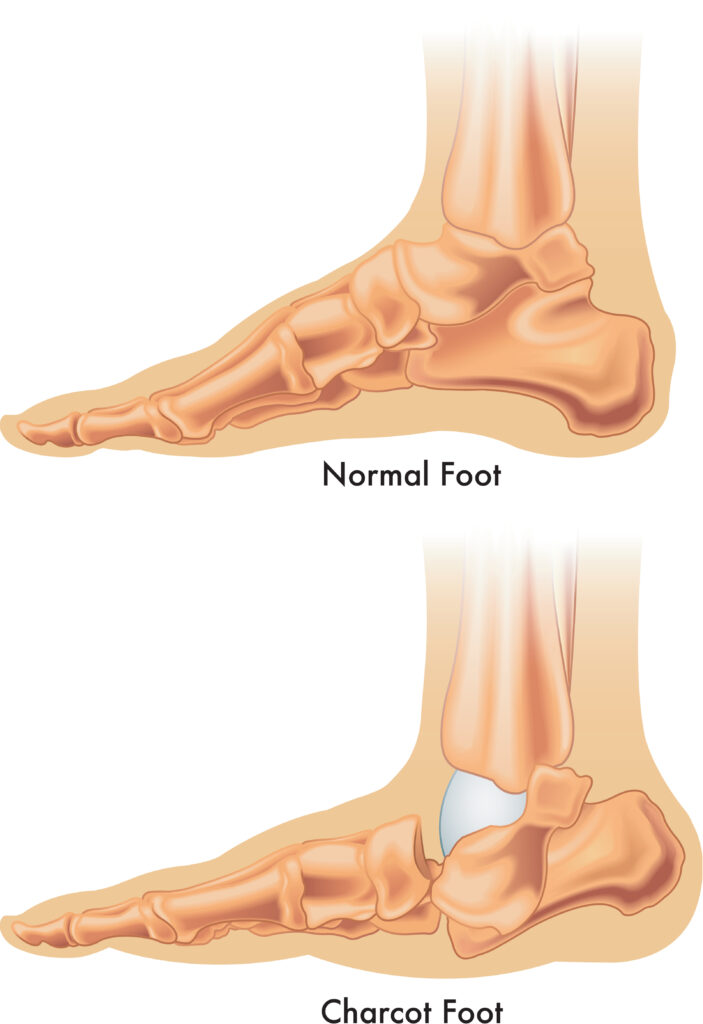
If you have diabetes, neuropathy, or any foot deformity that seems to be worsening, early evaluation is key. Charcot foot progresses quickly and is often painless due to nerve damage, meaning serious injury can occur before you realize it.
Reconstructive surgery, performed by an experienced orthopedic or podiatric surgeon, may be the best option to preserve mobility and quality of life.
Our team at Total Spine has experts dedicated to treating charcot foot and other conditions in the feet and ankles. If you’d like to make an appointment you can call (321) 499-4646 or fill out the form on this page.
Disclaimer: This article is for informational purposes only and is not a substitute for a consultation with a licensed healthcare professional.